South Korean President Lee Jae-myung emphasized that with the dramatic changes in the free trade order and deepening global economic uncertainty, trade and investment are losing momentum, and cooperation and solidarity are the clear solutions to lead Asia-Pacific economies to a better future.
The Asia-Pacific Economic Cooperation (APEC) Leaders' Informal Meeting opened on Friday (October 31) in Gyeongju, South Korea. In his opening remarks, Lee Jae-myung pointed out that the current international order is at a major turning point, the free trade system is undergoing profound changes, and global economic vitality has clearly weakened.
Lee Jae-myung called on member economies to "return to the original purpose of APEC" and work together to address unprecedented challenges through institutional cooperation and policy coordination.
"We cannot always hold completely consistent positions, but in the pursuit of common prosperity, we can absolutely move forward side by side," he emphasized, stressing that cooperation and solidarity are the only way for the region to move towards a better future.
He also mentioned that cutting-edge technologies such as artificial intelligence are reshaping the global industrial landscape, bringing both challenges and opportunities. APEC should embrace change proactively and seek new breakthroughs through dialogue and innovation.
Further Reading
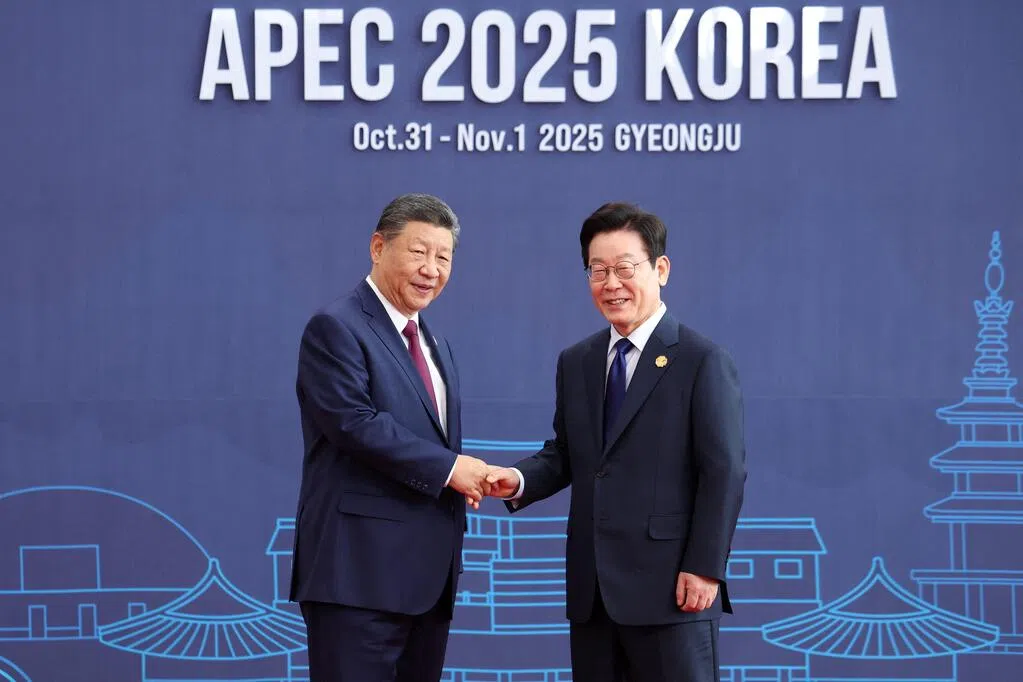
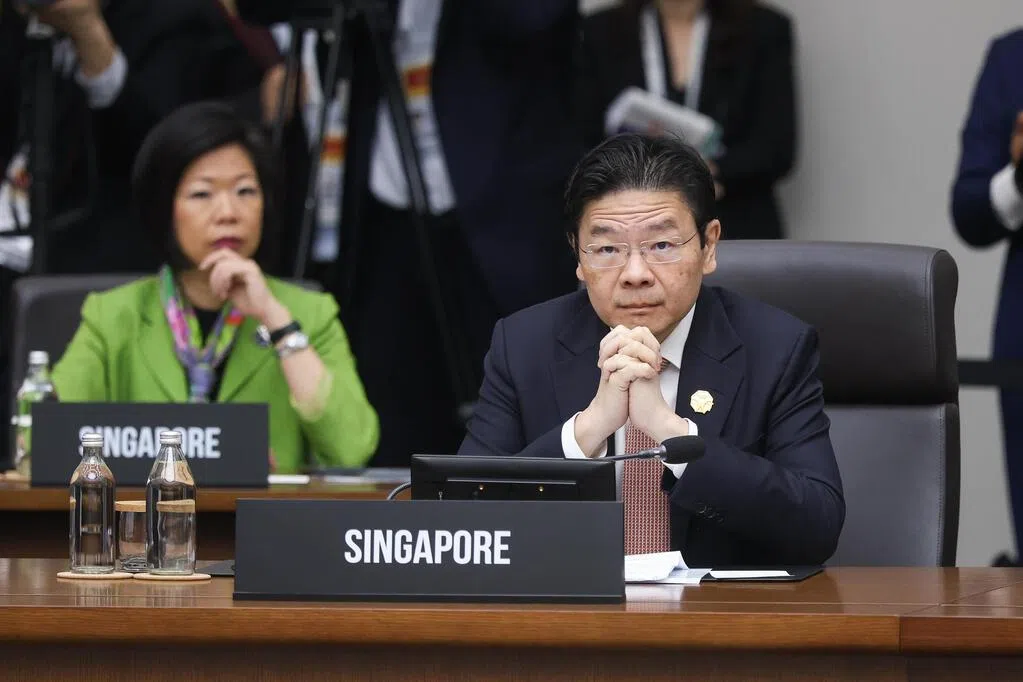
Lee Jae-myung specifically introduced the symbolic significance of the conference venue, the "Whabaek International Conference Center"—originating from the tradition of the "Whabaek Conference" of the Silla Dynasty, symbolizing the wisdom of governance achieved through multilateral consultation and consensus.
He called on all members to uphold the "Whabaek spirit," encourage the integration and coexistence of diverse voices, deepen connectivity and strategic cooperation within a multilateral framework, and inject momentum into building a more open, sustainable, and resilient Asia-Pacific community.
Xi Jinping Proposes "Five Joint" Cooperation Initiative Chinese President Xi Jinping then delivered a keynote speech, proposing a "Five Joint" cooperation initiative, calling on all members to "jointly build an inclusive, sustainable, and open Asia-Pacific economy."
He pointed out that the Asia-Pacific region is facing increasing instability and uncertainty; the more turbulent the times, the more necessary it is to work together and weather the storm.
Xi Jinping emphasized the need to jointly uphold the multilateral trading system and enhance its authority and effectiveness, with the WTO at its core; jointly create an open regional economic environment, promoting trade and investment liberalization and facilitation, and regional economic integration; jointly maintain the stability and smooth flow of industrial and supply chains, adhering to the principle of "joining hands rather than letting go, extending chains rather than breaking them"; jointly promote the digitalization and greening of trade; and jointly promote inclusive and equitable development, supporting more developing countries in achieving modernization.
He reiterated that China has fully implemented a zero-tariff policy on all least developed countries with which it has diplomatic relations, and is willing to provide the same treatment to African countries with which it has diplomatic relations through negotiated agreements. China will continue to deepen reforms, raise its level of openness, and continuously provide new opportunities for the Asia-Pacific region and the world with its new achievements in Chinese-style modernization.
Trump Returns to the US and Does Not Attend the Meeting US President Trump did not attend the APEC Leaders' Plenary Meeting that day. He returned to the US early after delivering a special speech at the APEC CEO Summit the previous day.
It is widely believed that Xi Jinping's APEC speech, against the backdrop of the "America First" policy continuing to impact multilateral cooperation, demonstrated to the international community China's commitment to openness, inclusiveness, and cooperation.
South Korean media pointed out that Xi Jinping's emphasis on "genuine multilateralism" and his advocacy for WTO reform and regional economic integration are not only a direct response to the tendency of "decoupling and severing ties" in the Asia-Pacific region, but also demonstrate China's increasingly confident and proactive strategic posture on the global stage.