(Washington, D.C.) U.S. President Donald Trump again pressured the Supreme Court, claiming that if the massive tariffs he imposed under the National Emergency Economic Powers Act are ruled illegal, the U.S. will lose far more than the $100 billion in tariff revenue, including potential investment losses exceeding $3 trillion, which he described as an economic and national security disaster.
On Monday (November 10), Trump posted on his social media platform criticizing "extreme left-wing lunatics" who opposed the tariff policy for underreporting the amount of tariff revenue the government would have to return if the policy were overturned, aiming to mislead the Supreme Court into believing that the tariffs were illegal and that the U.S. government could easily manage the situation.
He said, "We will actually have to return more than $2 trillion in tariff revenue and investment, which is a national security disaster in itself."
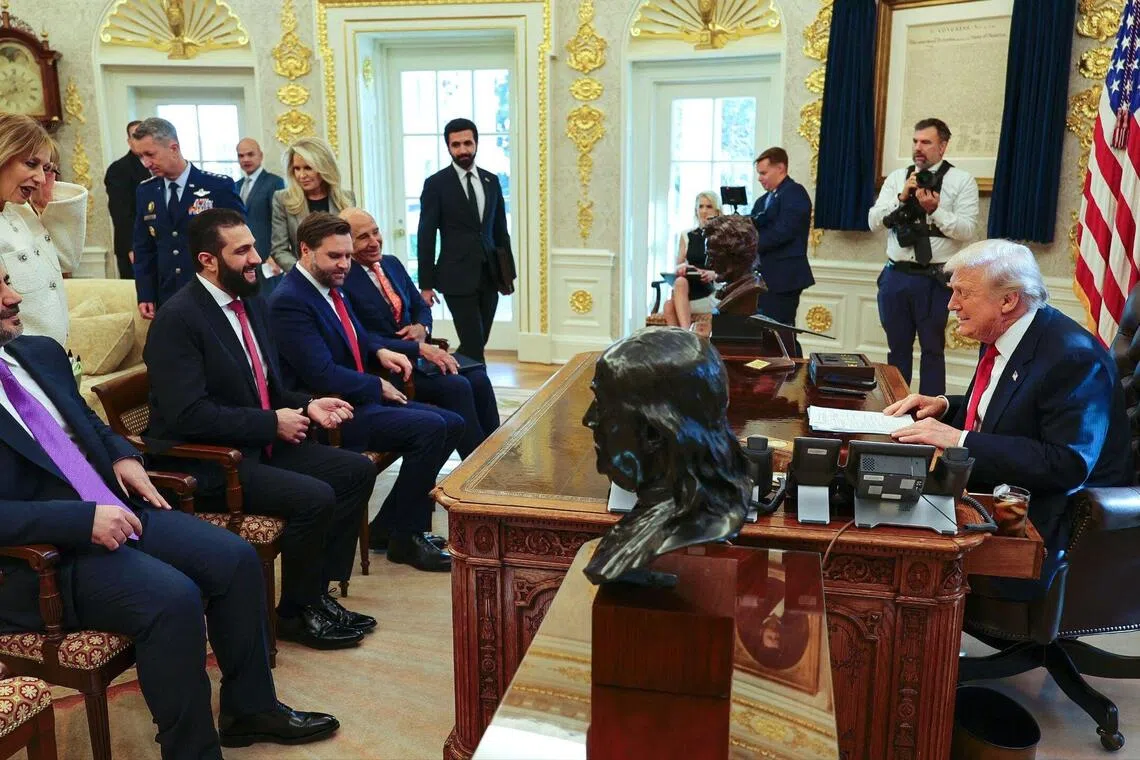
Later, while witnessing the swearing-in of the new U.S. ambassador to India at the White House, Trump also told reporters that the court had not obtained the correct data. He emphasized, "If the U.S. government loses this case, it will be an economic and national security disaster."
Trump, not content with this, posted again early Tuesday morning (11th), outlining an even higher potential loss. "If the tariffs are ruled illegal, the total amount exceeding $3 trillion will need to be reversed, including existing and future foreign investments, and tax refunds. The United States cannot recover from such a crushing defeat."
Further Reading
Trump did not explain how this amount was calculated. In late July, the White House received commitments from its three major trading partners—Japan, the EU, and South Korea—to invest massive sums of $550 billion, $600 billion, and $350 billion respectively in the United States.
The U.S. Supreme Court began its final appeal hearing last Wednesday (May 5th) on the legality of Trump's tariff measures. Six of the nine presiding justices, including three conservatives, questioned whether the practice violated congressional power. It remains unknown when the Supreme Court will issue its ruling, and whether companies can recover the more than $100 billion in taxes already paid if the ruling is unlawful.
Trump also reiterated at the White House on Monday that he is prepared to distribute approximately $2,000 in "tariff dividends" to every low- and middle-income American.
White House National Economic Council Director Hassett explained to reporters that the Trump administration originally believed it needed to use all tariff revenue to reduce the fiscal deficit, but due to the "significant surge in tax revenue," there is an opportunity to distribute dividends.
Trump: Tariffs on Indian Goods Will Be Lowered at Some Point
Regarding tariff negotiations between the US and India, Trump said the two countries are "very close" to reaching an agreement, and he will lower tariffs on Indian goods "at some point."
He said, "They don't like me right now, but we'll be back to normal very soon."
In early August, Trump accused India of significantly increasing its purchases of Russian oil after the outbreak of the Russia-Ukraine war, leading him to double the tariff rate on Indian goods to 50%, causing negotiations that had stalled due to India's unwillingness to lower tariffs and remove trade barriers to regress significantly.
Trump's latest statement indicates that negotiations between the two countries have made progress. "India has significantly reduced its purchases of Russian oil, and at some point, we will lower the tariff rate."
He also said that the newly appointed Washington ambassador to New Delhi, Sergio Gor, has developed a friendly relationship with Indian Prime Minister Modi, and will go on to strengthen ties between the two countries, promote investment in key US industries and technologies, increase US energy exports, and expand bilateral security cooperation.
News: Switzerland May Reach Agreement with US as Early as Thursday
Reports indicate that Switzerland could reach an agreement with the US as early as this Thursday or Friday, significantly reducing its tariffs from 39% to 15%, aligning it with those of the EU and Japan.
Sources familiar with the matter say an agreement could also be reached next week, but they warn that because negotiations are still ongoing, it could ultimately fail at the last minute, similar to the situation in July.
The Swiss government declined to comment on the latest rumors.